
A traditional Mediterranean kitchen will likely conjure up visions of sun-splashed terracotta tiles, wooden rafters, and chunky, dark wood cabinets that may seem too claustrophobic for today’s modern family. Yet, there is a fantastic transformation taking place within North America and Great Britain’s interior spaces. Today’s homeowner is reinventing the traditional Mediterranean kitchen concept by removing the cluttered nature of its design and adding a streamlined, sophisticated simplicity. The result? An awe-inspiring blend of architectural warmth from days gone by that effortlessly melds together with modern simplicity.
No matter if you are renovating a large suburban property in Toronto, restoring a heritage brownstone in Boston, or building a bright townhouse in London, this perfect balance provides you with the ideal solution. It allows you to appreciate the textured essence of Southern Europe with its rich plaster walls, marble floors, and unlacquered brass while focusing on your kitchen’s practicality and open design. To learn more about how to merge the old-world charm of the Mediterranean with a modern architectural approach, read on below.
1. The Anatomy of a Modern Mediterranean Kitchen
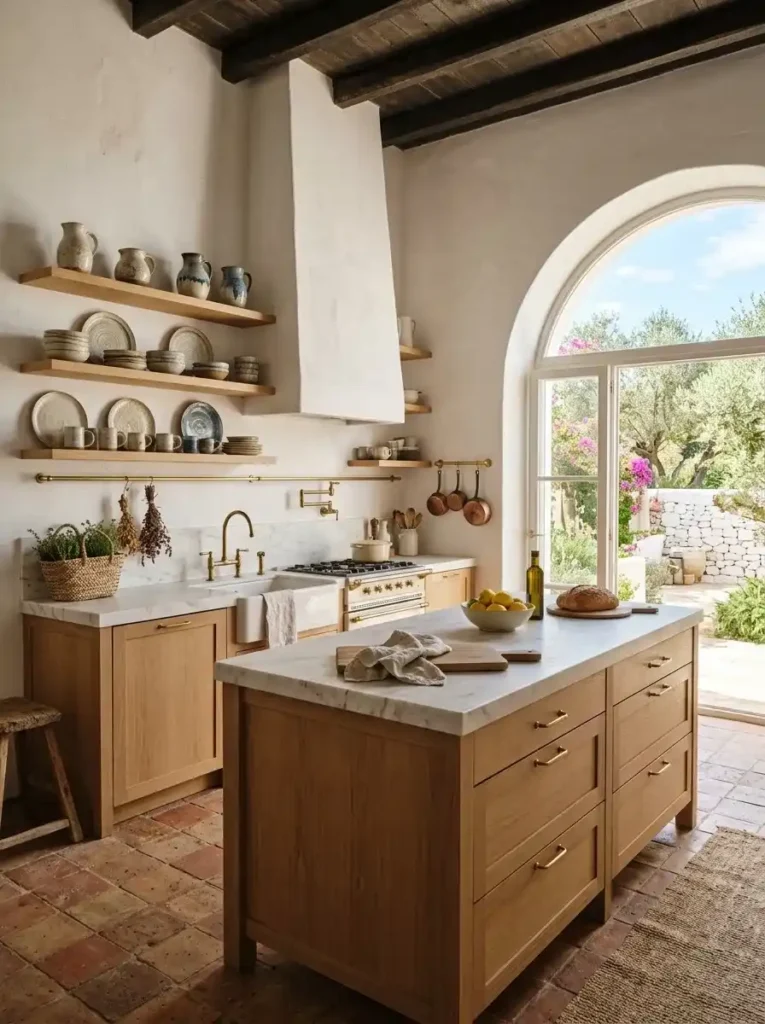
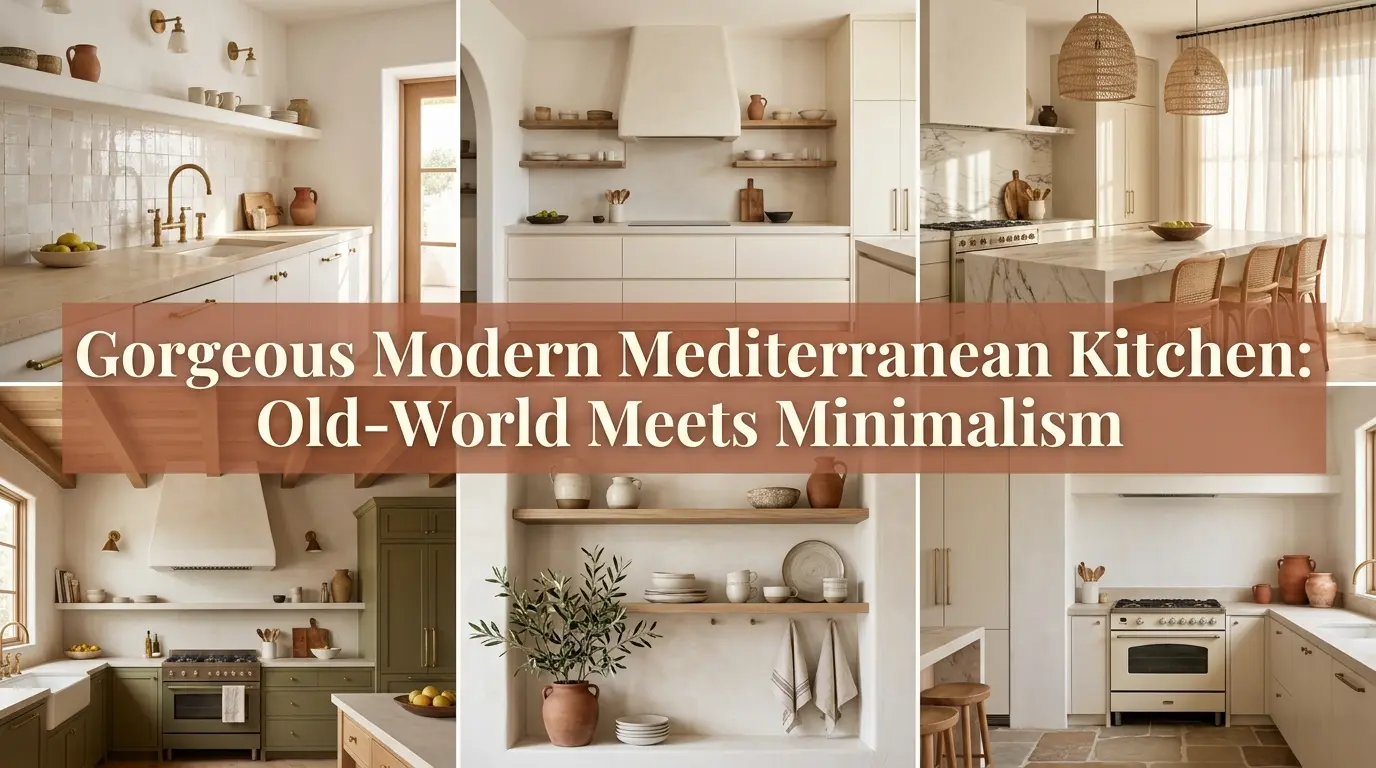
The modern Mediterranean kitchen brings a balance of traditional warmth with a sleek and minimalist approach to function. The dark and heavy Tuscan look that was popular at the beginning of the 2000s has been replaced by lightness, sunny colors, and texture. Plaster walls combine with terracotta tones to create a culinary environment that is not only welcoming but luxurious.
A traditional Mediterranean kitchen makes use of authentic materials. This means using zellige tile for the backsplash, rustic wooden beams for the ceiling, and brass fixtures that develop a patina over time. Artisanal ceramics are displayed in open shelving, and an island that features Calacatta marble allows for relaxed entertaining and family dinners.
2. Balancing Old-World Rustic Warmth with Clean Minimalism
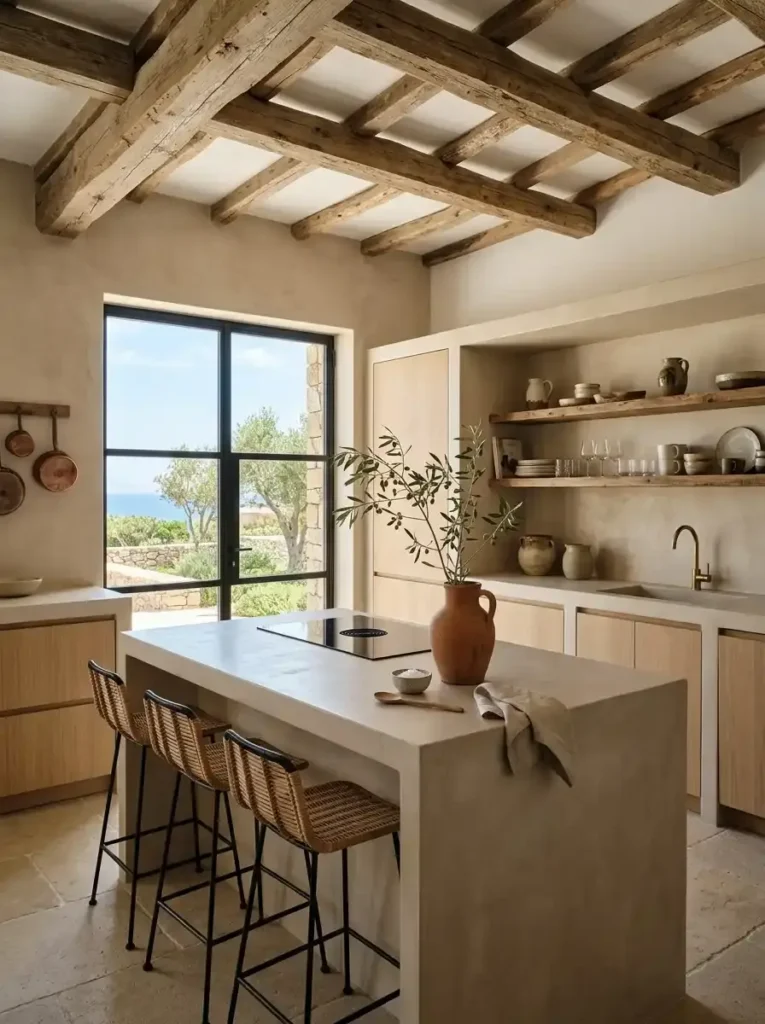
The ideal balance can only be achieved when there is an intelligent play of history and restraint. In the modern approach, there is less fuss and more focus on the “less is more” mantra while keeping the soulful aspects alive. The old cabinet is stripped of its fancy finishes, and simple handleless slab doors are added to highlight the exposed beam ceilings or the rustic, handcrafted stone sink.
With the minimalist Mediterranean kitchen, there is a sense of warmth brought about by the textural element rather than any form of excessive decor. The smooth micro cement counter works well with the textured lime wash walls to create a calm backdrop that at once feels open yet solid. This approach makes the kitchen very functional while reflecting the laid-back elegance of the European coastal home.
3. Essential Color Palettes: Terracotta, Olive, and Bright Alabaster
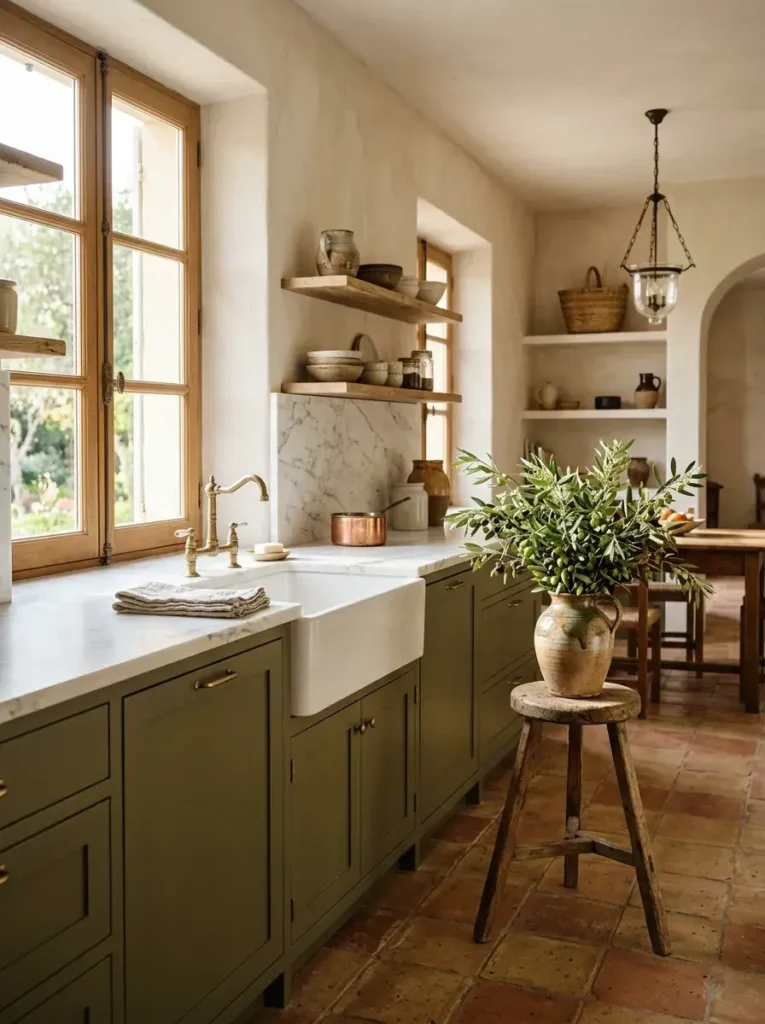
The key to a genuine coastal look comes from the carefully selected color palette inspired by nature, which is reminiscent of the sunny landscapes of Southern Europe. Pure white alabaster becomes the bright backdrop against which the wall paints reflect the early morning sunlight in the room and instantly evoke the feeling of spacious elegance.
In order to avoid making the kitchen space sterile and devoid of any warmth, include the colors of baked terracotta along with the deep and organic tone of olive green. You can use these colors as glazes on handmade tiles, large ceramic objects, or the surface of the kitchen island. In this way, you can achieve a sophisticated and timeless Mediterranean kitchen atmosphere.
4. Why Warm Wood Elements Are Non-Negotiable in This Aesthetic
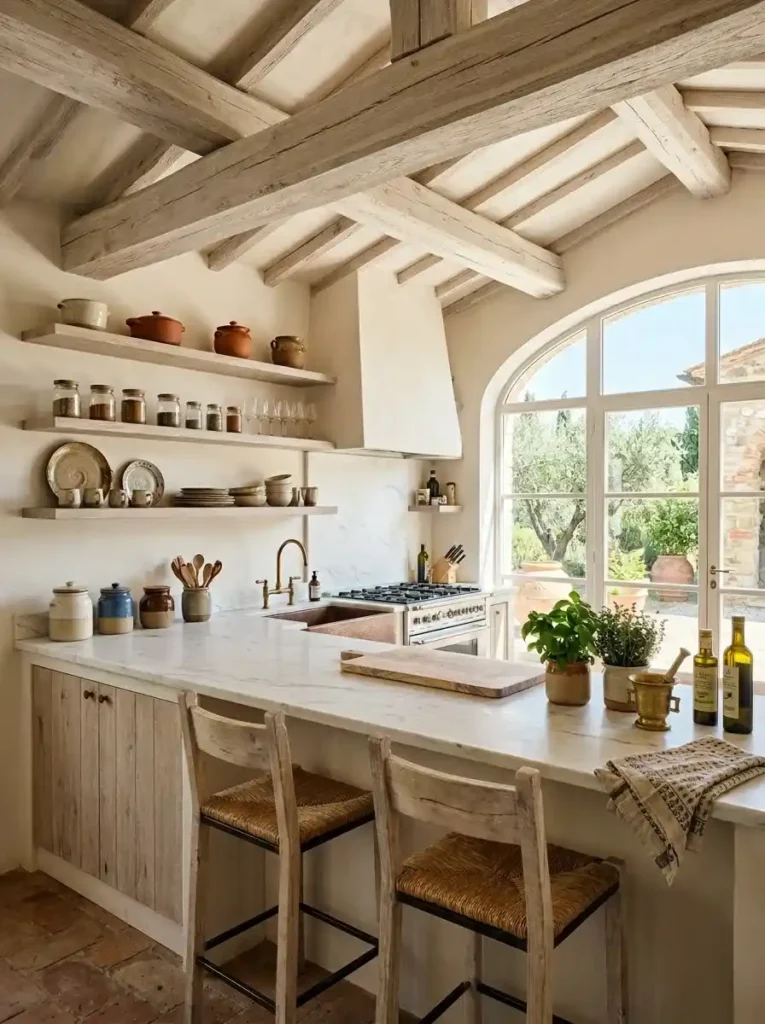
The inclusion of organic elements such as timber in contemporary seaside kitchens is crucial in helping create a sense of grounding and historical significance. The absence of these materials will only make the area feel cold and clinical because of the abundance of plastered surfaces. Using reclaimed wood in the form of beams, shelves, and wooden islands in the kitchen adds a touch of elegance and immediately provides warmth to the cool surface.
Also, the use of reclaimed wood will help the space exude the same charm associated with European villa designs, which feature timeless architectural elements. The selection of matte, wire-brushed, or unlacquered finish on reclaimed wood creates the ideal blend of functionality and rustic elegance that results in the creation of a truly Mediterranean kitchen.
5. Swapping Heavy Cabinets for Sleek, Light-Filled Open Shelving
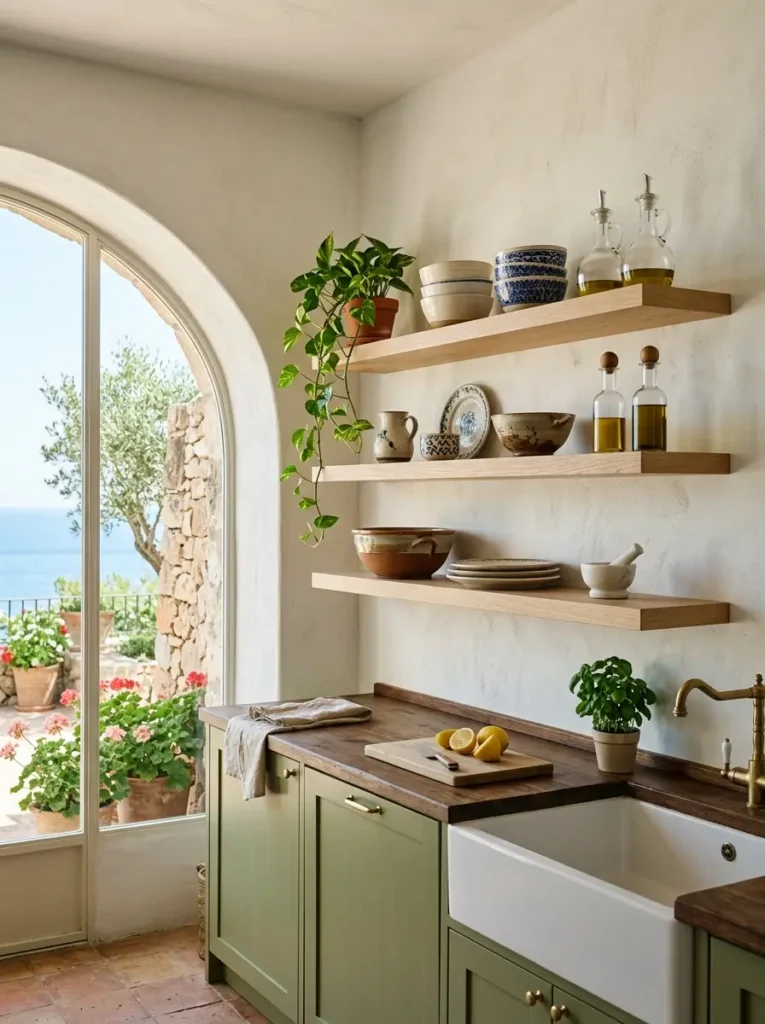
The traditional heavy cabinetry on top quickly becomes a source of smothering the space by blocking light and making the room smaller visually. The substitution of heavy cabinetry by minimalistic open shelves immediately adds a feeling of airiness and lightness to your living area. This change resembles the leisurely life of the coastal Europe in which function is achieved through the means of conscious designing and creating easy spaces.
Open shelves in the contemporary Mediterranean kitchen become not only the place of storing the stuff but a way to present it. The reclaimed wood planks and floating limestone shelves serve as a backdrop for displaying unique artisan pots, mortars, and pestles along with neatly arranged neutral plates. Such kitchen becomes filled with sunlight, creating the space for culinary enjoyment.
6. Incorporating Statement Plaster and Microcement Range Hoods
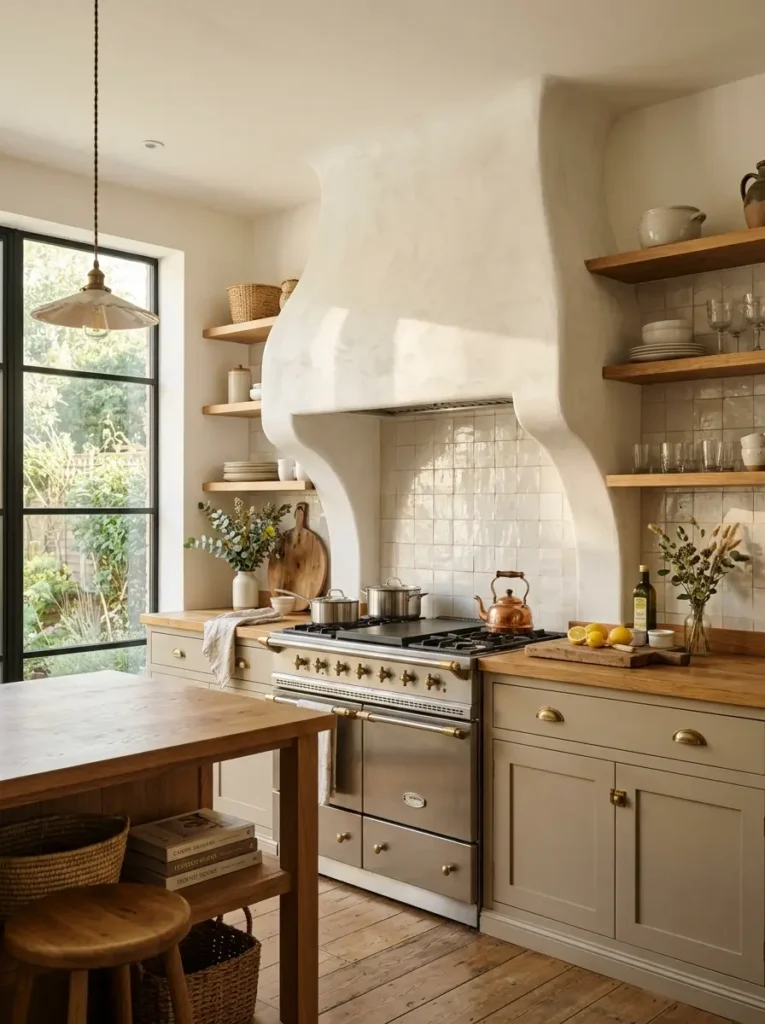
The current generation of canopies is not just a mere household appliance; it is an artistic creation. A custom plaster or microcement range hood will instantly add a touch of ancient European flair to your modern interior. With their fluid shape and seamless construction, they move away from the sharpness of stainless steel and bring an element of softness and elegance in the form of a beautiful curve overhead.
Regardless of whether you choose a gracefully tapering look or a solid block appearance, the unique texture will add amazing depth to any space. The hand-made troweling process used when crafting microcement leaves beautiful imperfections on its surface, which shimmer in any ambient light, creating a unique aesthetic appeal. The stunning decorative effect that they create easily transforms any Mediterranean kitchen into a piece of art.
7. Stunning Backsplash Ideas That Marry Euro-Vibes with Modern Lines
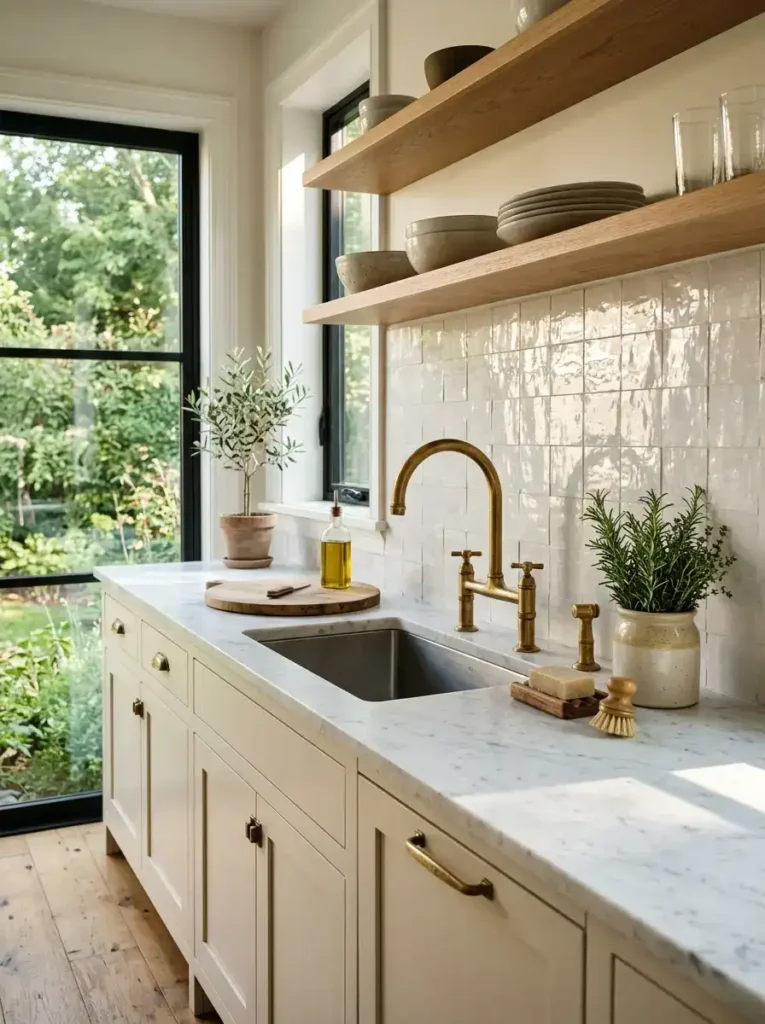
This is where your design story will culminate in the backsplash. You can add the touch of old-world Europe to your modern architecture with hand-glazed zellige tiles. They have soft tone variations along with unique shapes that sparkle when exposed to light. Combine them with ultra-modern countertops for an incredible texture that feels totally fresh.
To make a strong visual impact, you can use elaborate patterns with Moorish motifs or patterns from Tunisia, but with softer colors. You can even get away with the more subtle look by using the smooth, vein-filled Calacatta marble to create a seamless slab backdrop. After all, your dream backsplash will be the one that gives your modern Mediterranean kitchen its own character and soul.
8. Sourcing the Perfect Matte Black and Aged Brass Hardware
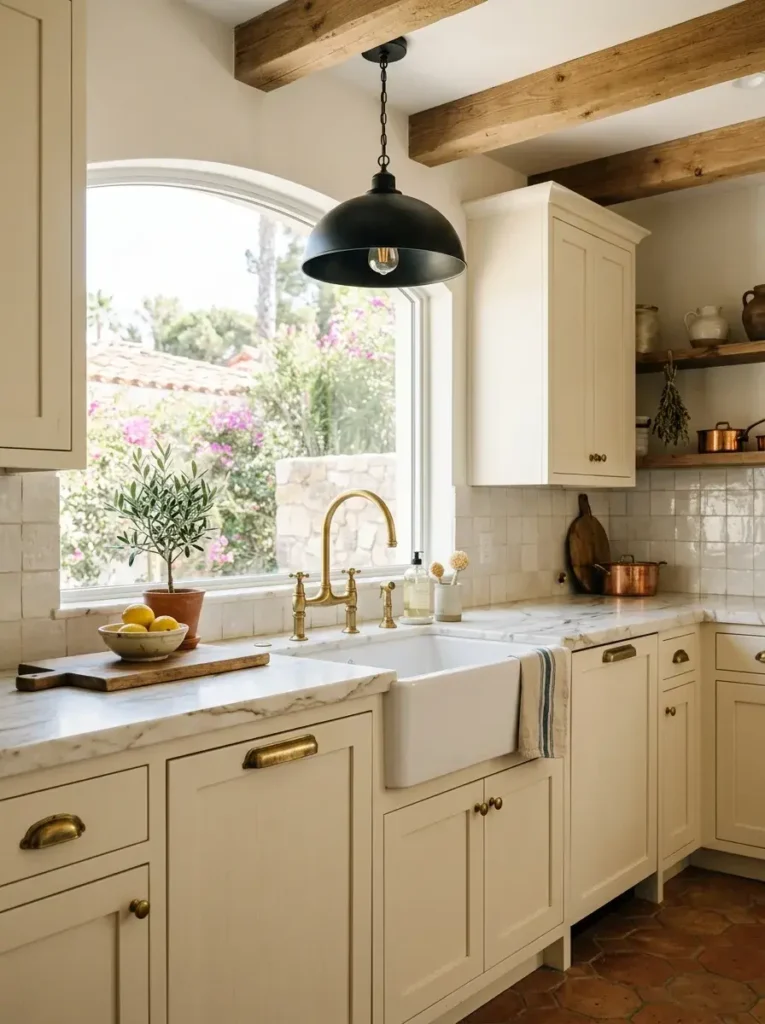
The hardware is the absolute punctuation in luxurious interior designing; it connects the old-fashioned style to the modern elegance. In order not to make an interior design look vintage because of shining metal hardware, try selecting a combination of materials with a natural texture and feel. Choosing hand-forged matte-black iron knobs or unlacquered aged brass pulls can provide you with an authentic story for your cabinets.
Combining the different metallic finishes in such an environment necessitates a certain level of design expertise. Incorporate thick, matte black iron into window hardware, racks, or even lighting in order to provide that grounding presence. On the other hand, the luxurious quality of aged brass is best used in handles and high-quality bridge-style faucets.
9. How to Choose a Minimalist Countertop for Your Mediterranean Kitchen
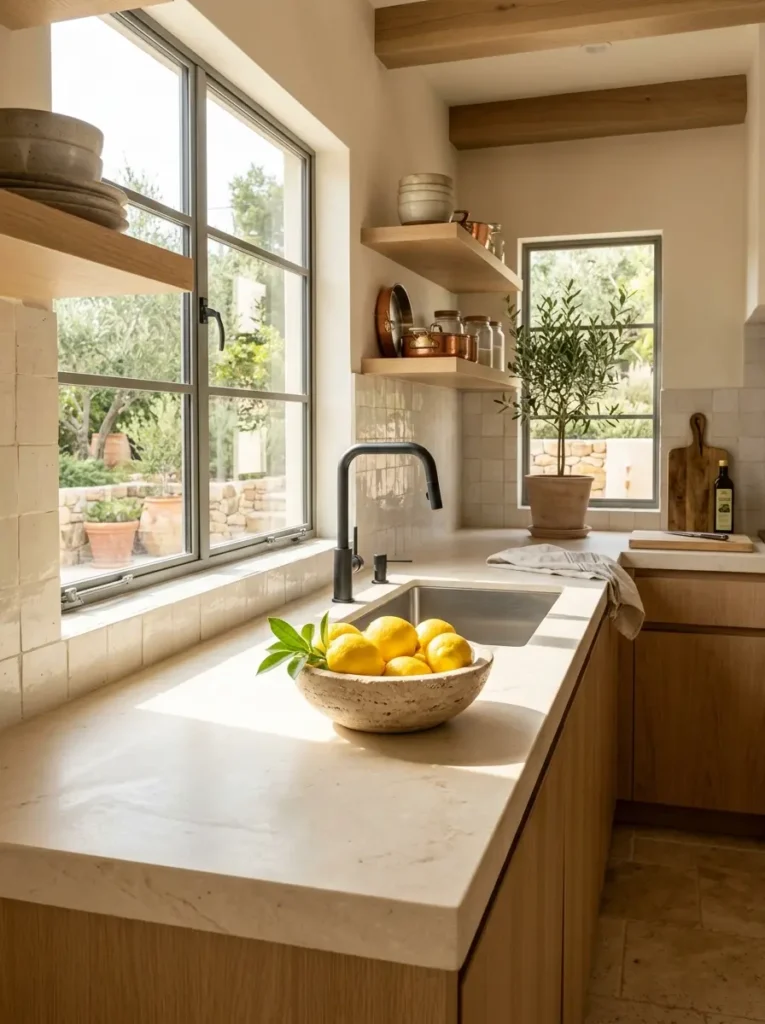
The process of selecting the best material for your contemporary Mediterranean kitchen involves finding materials that combine their ruggedness and organic qualities with sleekness and simplicity. In doing so, steer clear of materials with elaborate veining or overly polished surfaces because you want something subtle. A smooth and honed finish will exude luxury without shouting at you. A beautiful limestone slab, cream-colored quartz, or even microcement surface will be your best choice.
Durable and stain-resistant materials that exude a sense of warmth will help you build your contemporary Mediterranean kitchen. The use of thick edges on your kitchen surfaces and eased edges as opposed to elaborate designs will make sure that your kitchen will be modern and functional while still preserving that unique old-world charm.
10. Statement Lighting: Wabi-Sabi Pendants to Sleek Linear Fixtures
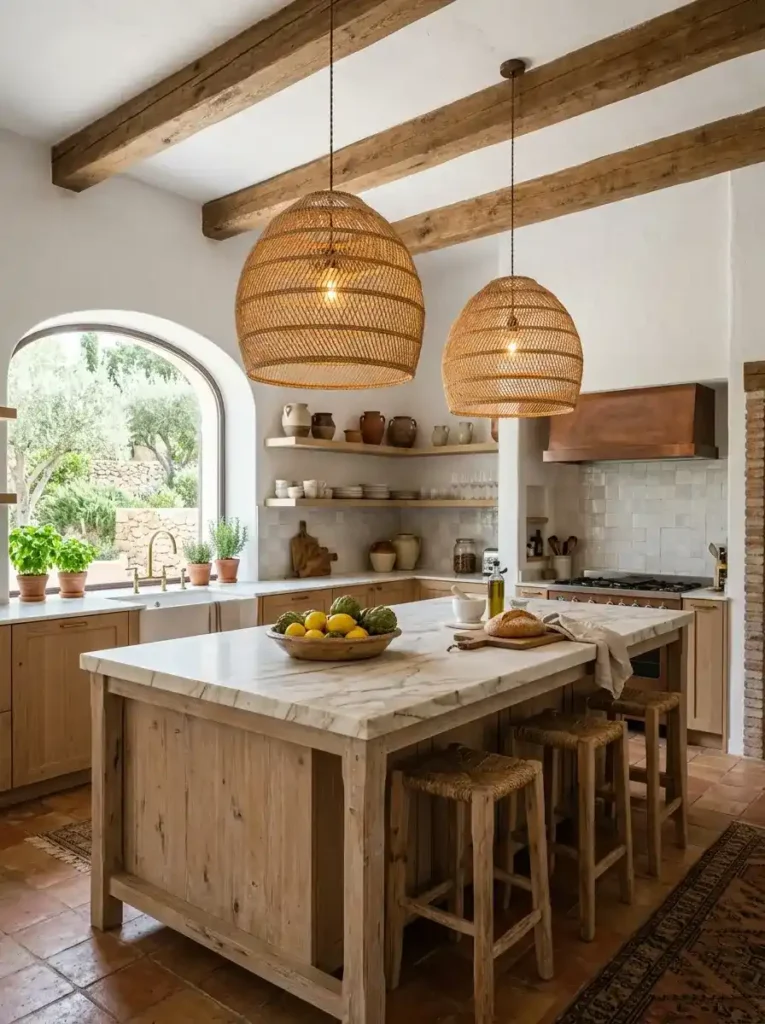
Lighting acts as the ultimate highlight for modern culinary spaces, bringing out the contrast between basic texture and elegant luxury. For instance, if you desire that classic coastal European look, opt for those massive wabi-sabi pendants that have been intricately made using natural materials like woven rattan, hammered brass, or distressed terracotta. The unique pendant lighting will bring some interesting asymmetry into your space while throwing some soft shadow across hard surfaces.
However, should your design be a little transitional in nature, go ahead and place a highly sleek linear light fixture over the center island. The combination of a very sleek light source over a rustic plastered backdrop is quite eye-catching. With the help of both functional and artistic lighting sources, your Mediterranean kitchen becomes a great place for meal preparation and social gatherings alike.
11. The Art of the Imperfect: Bringing in Tadelakt and Zellige Tiles
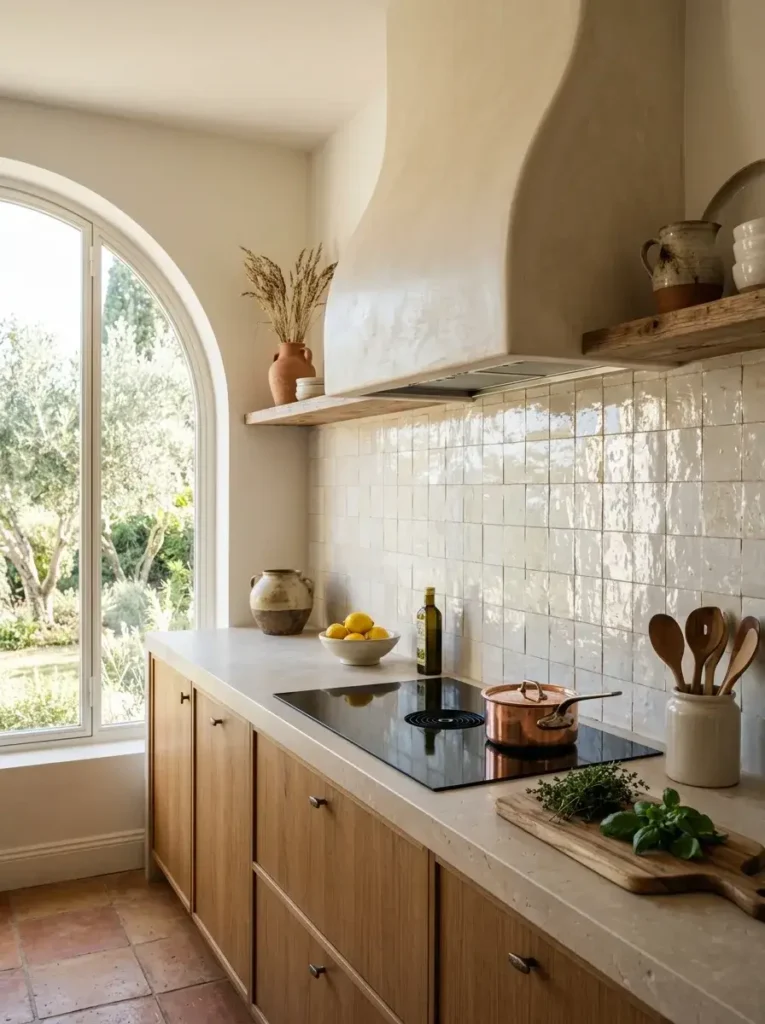
Incorporating true European elegance requires embracing the beauty inherent in the imperfections of handcraftsmanship. In a luxurious food preparation area, there is no material better suited for expressing this aesthetic principle than the hand-honed Moroccan Tadelakt plaster and the glazed Moroccan Zellige tiles. This unique approach eschews the blandness and monotony typically associated with conventional North American kitchen renovation practices by allowing the creation of gentle waves, multiple shades of colors, and changing reflections from the varying daylight angles throughout the day.
The application of the smooth Tadelakt plaster to a hood or wall can be done seamlessly, creating a soft stonelike surface that is both soothing and eye-catching. Combining it with the constantly changing high-gloss finish of the Zellige backsplash creates the magical touch that is needed for a Mediterranean kitchen interior to turn into an artwork.
12. Clever Storage Solutions to Keep Your Countertops Clutter-Free
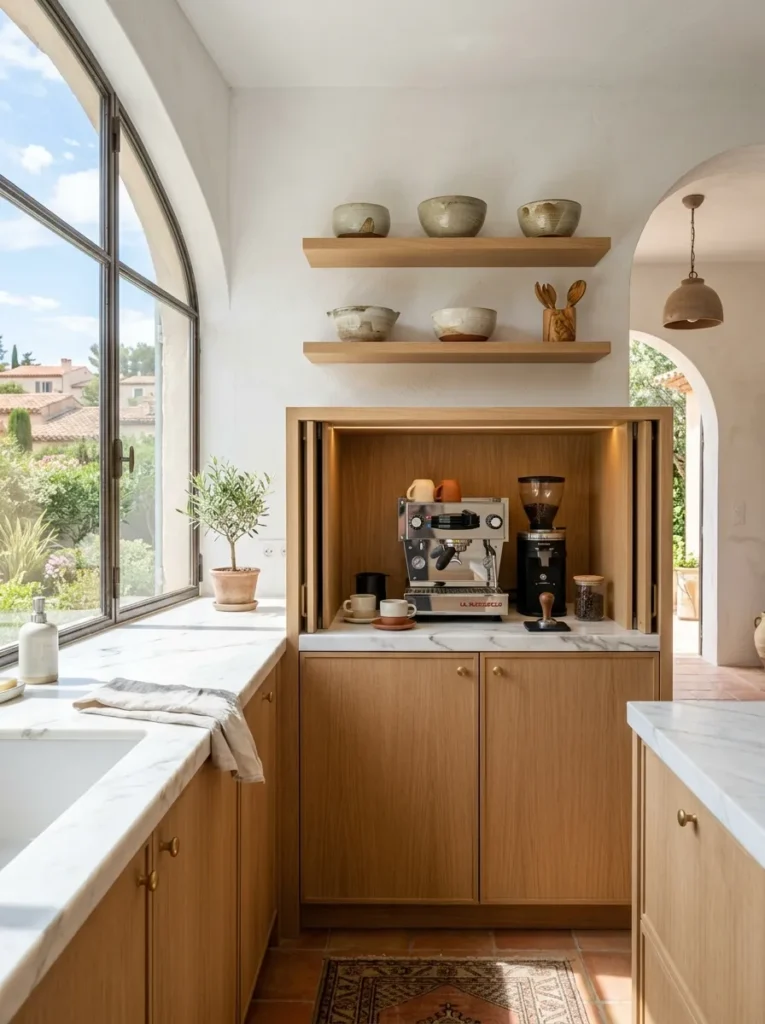
The creation of an idyllic setting calls for the disappearance of modern small household appliances from sight. In order to do this, it is essential to install a custom-designed appliance garage complete with pocket doors that open and close without leaving any trace of their presence. The installation of a hidden area will allow you to store your espresso machine and blenders safely, leaving your stone countertop uninterrupted by clutter.
To complete the picture of this design concept, add soft-closing drawers concealed behind simple front doors of the cabinet. Rather than decorating counter tops, consider using open shelving made from reclaimed wood for showcasing only those objects that have been placed there on purpose. Your Mediterranean kitchen will be efficient and functional in its performance as well as visually inspiring and relaxing at the same time.
13. Integrating State-of-the-Art Appliances Without Losing the Vintage Charm
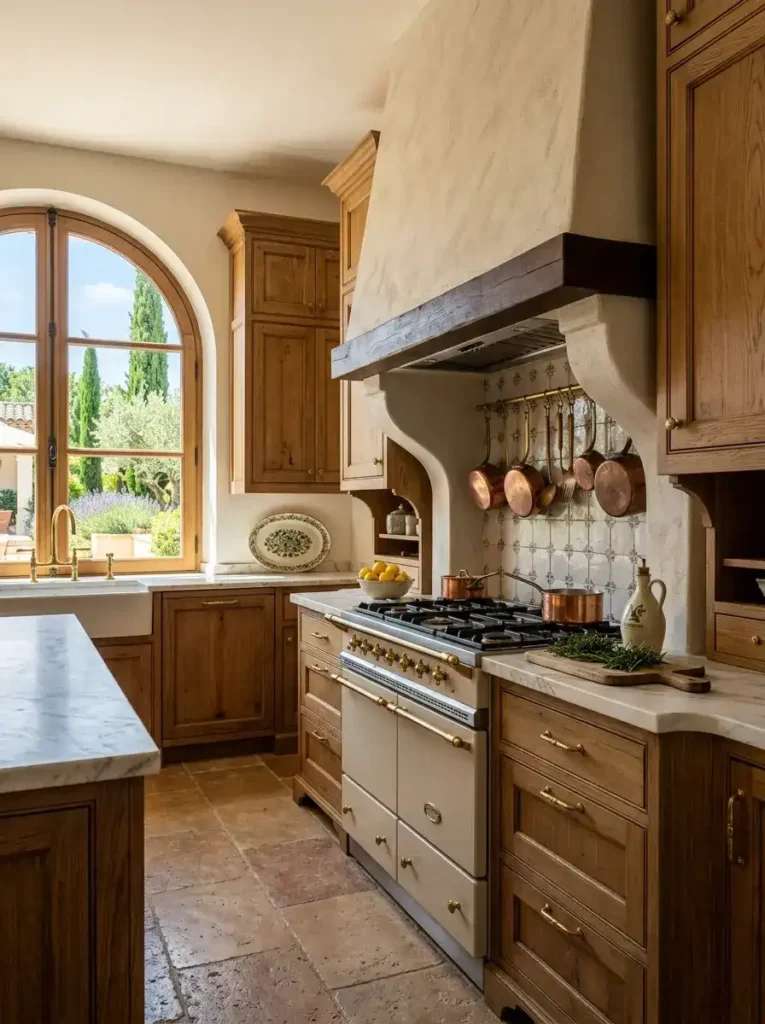
In order to successfully introduce a high-tech, contemporary component into a heritage-inspired cooking environment, it is essential to employ a creative approach that incorporates both concealment and curation techniques. To preserve the authenticity and true heritage feel of the room, consider selecting panel-ready refrigerators and dishwashers that can blend seamlessly into any kitchen layout without detracting from the overall ambiance or aesthetic appeal of the space.
When it comes to the equipment that will be displayed within your Mediterranean-style kitchen, think about making a bold statement. Incorporating a statement French-top range in either a matte black or cream shade, enhanced by unlacquered brass hardware, allows you to strike the perfect balance between high-end culinary functionality and vintage flair.
The kitchen island is the crown jewel of any Mediterranean kitchen — explore every style worth considering — 15 Modern Kitchen Island Ideas That Combine Style, Storage & Function
14. Styling with Purpose: Curating Stone Bowls, Olive Branches, and Linen
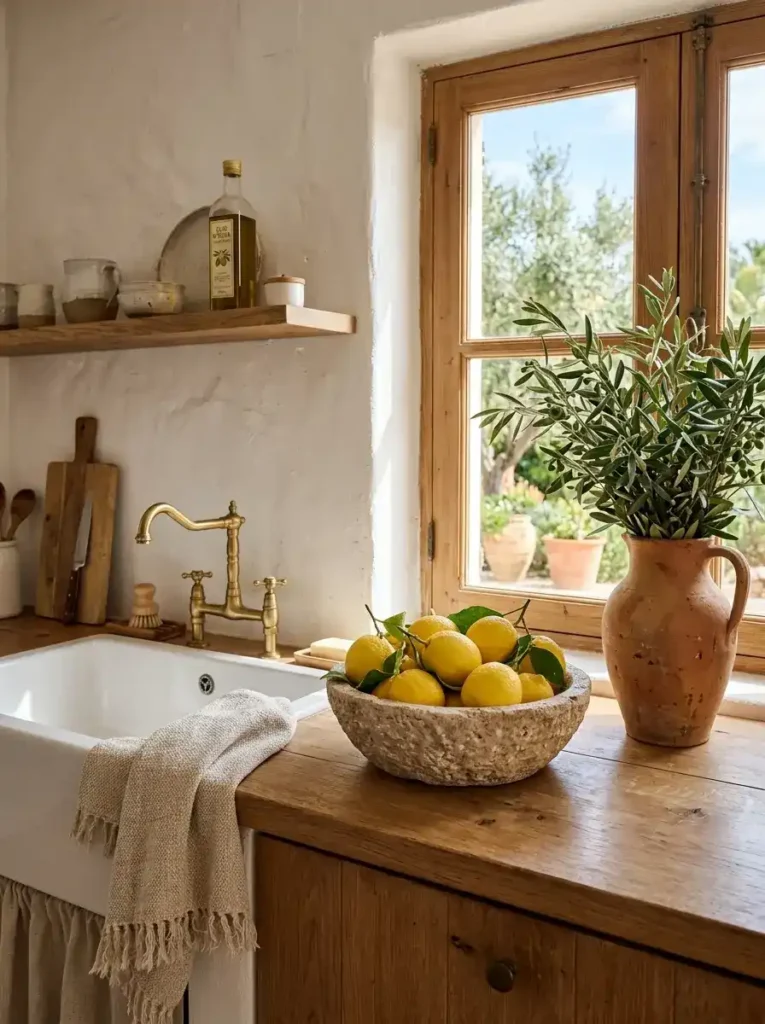
The last step in creating a beach-themed cooking area requires the use of stylized furniture pieces instead of ready-made items. The key is to choose objects that blend functionality with visual appeal. A hefty, intricately carved stone basin can be set atop a counter to provide both function, for storing fruits and vegetables, and to give the entire environment a bold texture against smoother materials.
To soften those harsh elements, bring in natural fabrics and living plants. Hang a crumpled linen tea cloth on a farmhouse sink to add subtle charm that will be greatly appreciated in any modern design scheme. Add some grand, large branches of olives into an old clay pot to bring movement, vitality, and the fresh European breezes to your new Mediterranean kitchen.
15. Common Design Mistakes to Avoid in a Minimalist Euro-Style Space
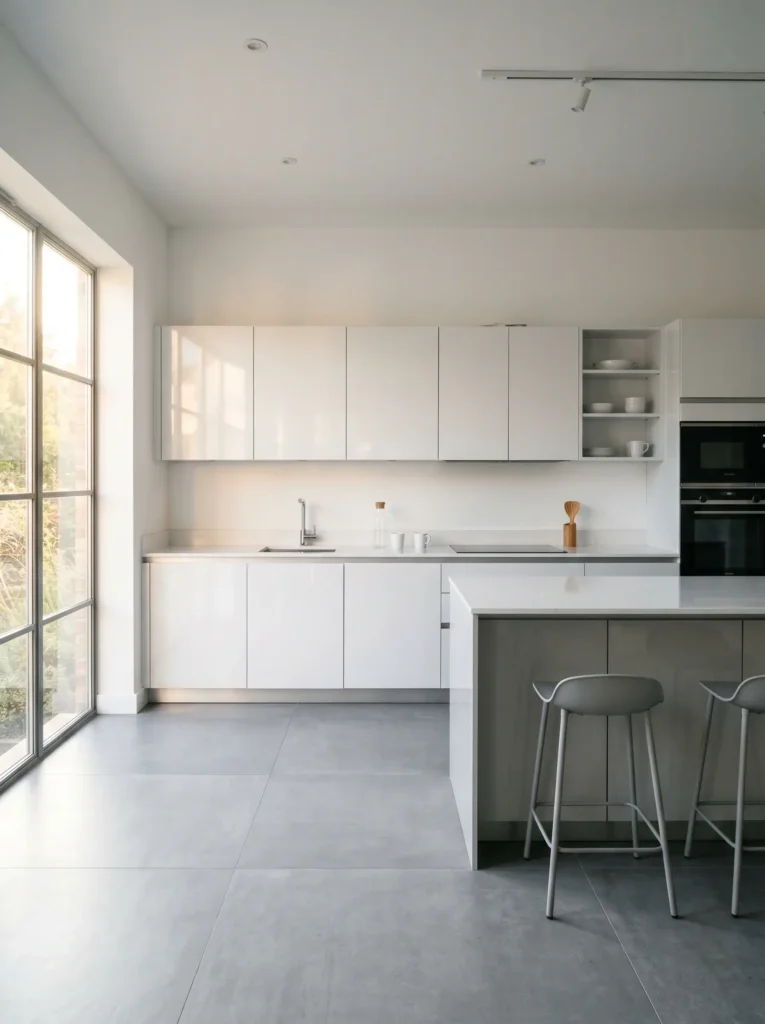
One of the biggest mistakes made when designing a minimalist style inspired by the cuisine of Europe is over-sanitizing the space. People get carried away in making everything clean and end up losing the warmth and charm from doing so. A minimalist space design needs that balance; not including the texture and soulfulness that are a part of the area makes it dull and alien to its seaside environment.
Another important mistake to avoid is not incorporating the tactile variety of quality natural materials into the design. The whole charm of an old-world Mediterranean kitchen design is lost if only artificial and smooth surfaces are used. Also, failing to create the correct layering in the lighting design may make plaster finishes look dirty. Do not use uniform tiles and embrace imperfection.
16. Flooring Options from Reclaimed Flagstone to Polished Concrete
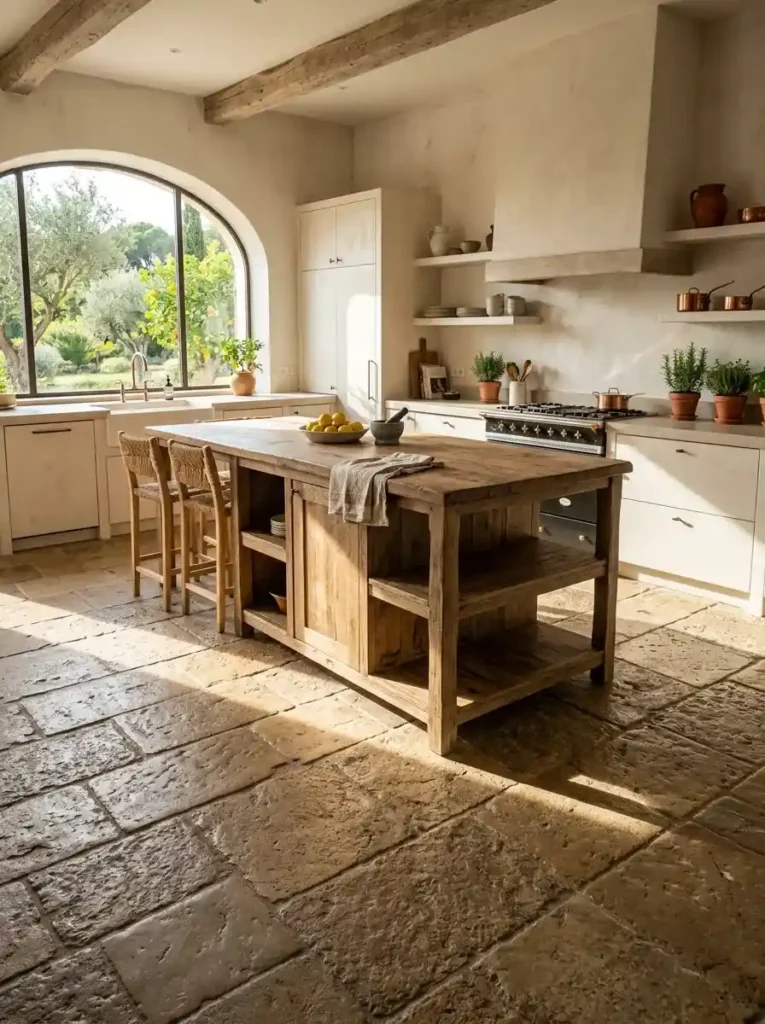
Setting a foundational base in your culinary domain starts right from the ground up, and the material used will lay the entire aesthetic groundwork for the design scheme. There are few things as good for this purpose than reclaimed flagstones, which are highly prized for their irregular shapes and textures reminiscent of a centuries-old European villa. Their color variations, which vary from limestone to sandstone shades, make them perfect choices for flooring in areas of heavy foot traffic.
On the other hand, those who prefer more streamlined designs will be pleased with the option of polished concrete, whose industrial appearance perfectly contrasts with the traditional building elements. Whether you go for the vintage flair of salvaged stones or the cool feel of concrete, your flooring choice will set the foundation of your Mediterranean kitchen design scheme.
17. Designing a Welcoming, Multi-Functional Kitchen Island Hub
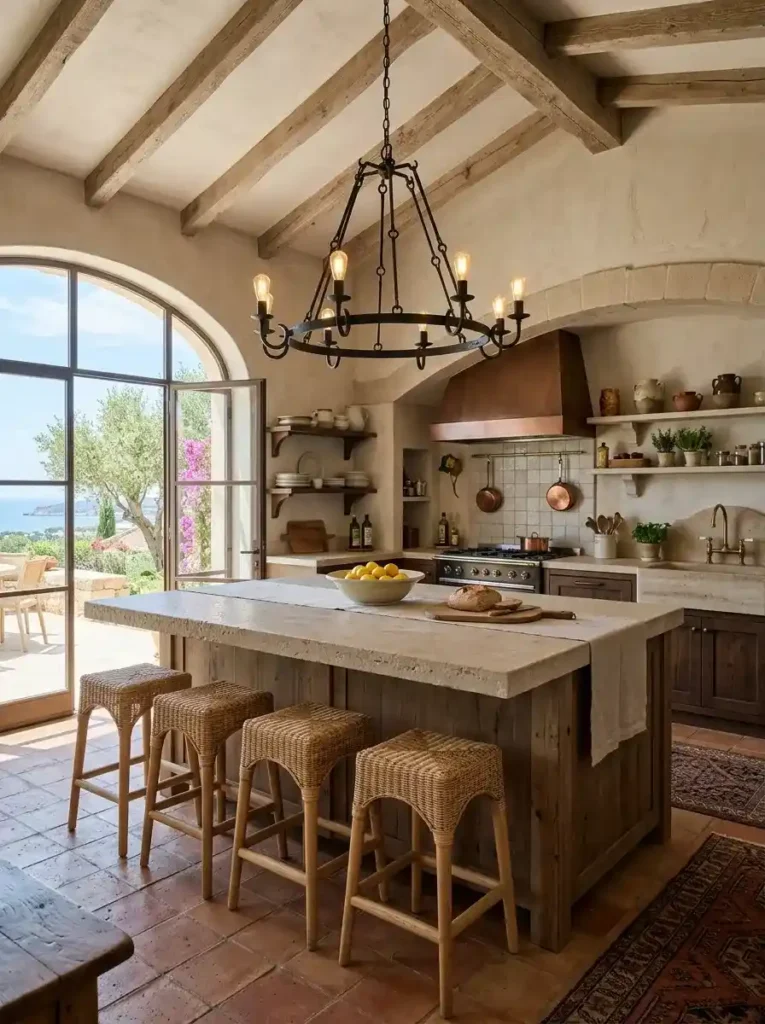
The contemporary island is not just an architectural centerpiece of the house; it also marks the transition from cooking to entertaining. The Mediterranean kitchen concept should feature an easy-going center hub that will accommodate both hectic family breakfasts and cozy wine-tasting evenings. By focusing on spacious dimensions and unobstructed views, the island creates the architectural focal point encouraging guests to wait around until dinner time arrives.
A successful multi-purpose center hub is achieved when you combine practical storage with luxurious material finishes. Include large drawers covered in warm wire-brushed oak along with an expansive counter made of elegant honed limestone or sturdy quartzite slabs. Rattan-woven stools placed by the countertop add a coastal touch to your design concept while staying true to the laid-back environment.
18. Budget-Friendly Ways to Inject Euro-Chic Style into Your Current Setup
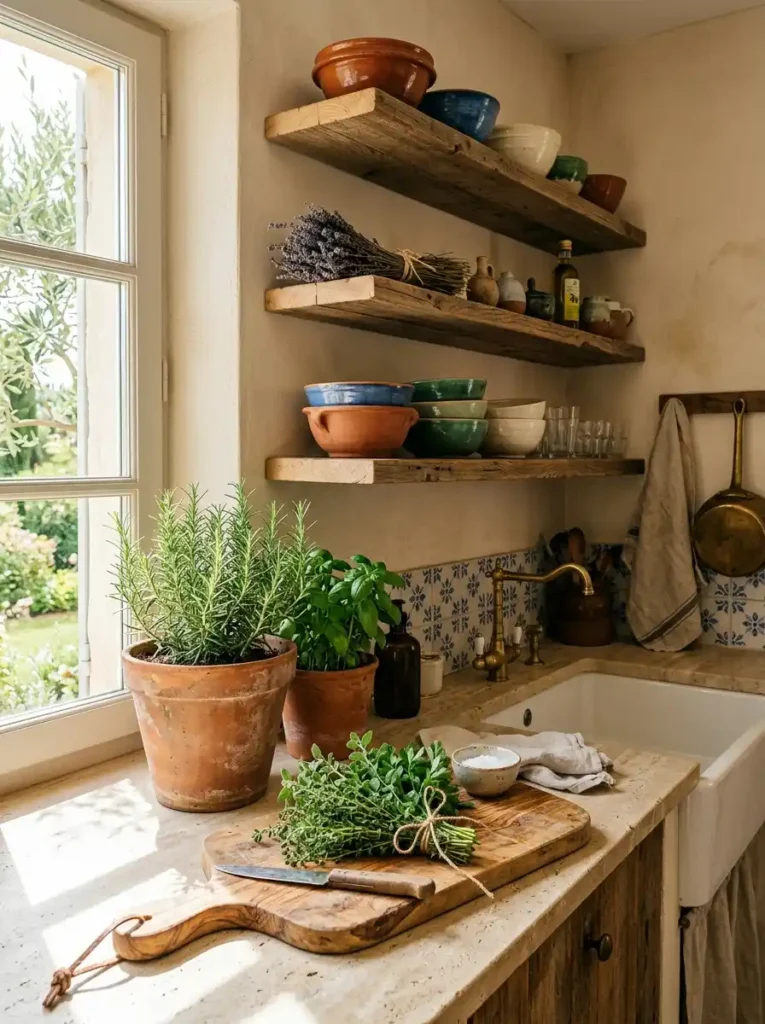
A complete renovation is not required in order to achieve the graceful simplicity of the south of Europe. The style of a Mediterranean kitchen design can be brought to life through purposeful styling touches. Begin with cabinet hardware; replace dull handles with unlacquered brass or wrought iron pulls, which acquire a natural patina over time. By removing heavy upper cabinets and installing floating wooden shelves, a lighter vibe will instantly emerge.
Other decorative elements can help create a stylish kitchen at a low cost. Add natural textures with terracotta pots, linen tea towels, and olive wood cutting boards placed on counters. Replace existing tile with peel-and-stick tiles resembling traditional zellige tiles. Each individual choice can add up to create a Mediterranean kitchen design with a sophisticated yet inviting atmosphere.
19. Timeless Inspiration for a Longevity-Focused Mediterranean Kitchen Design
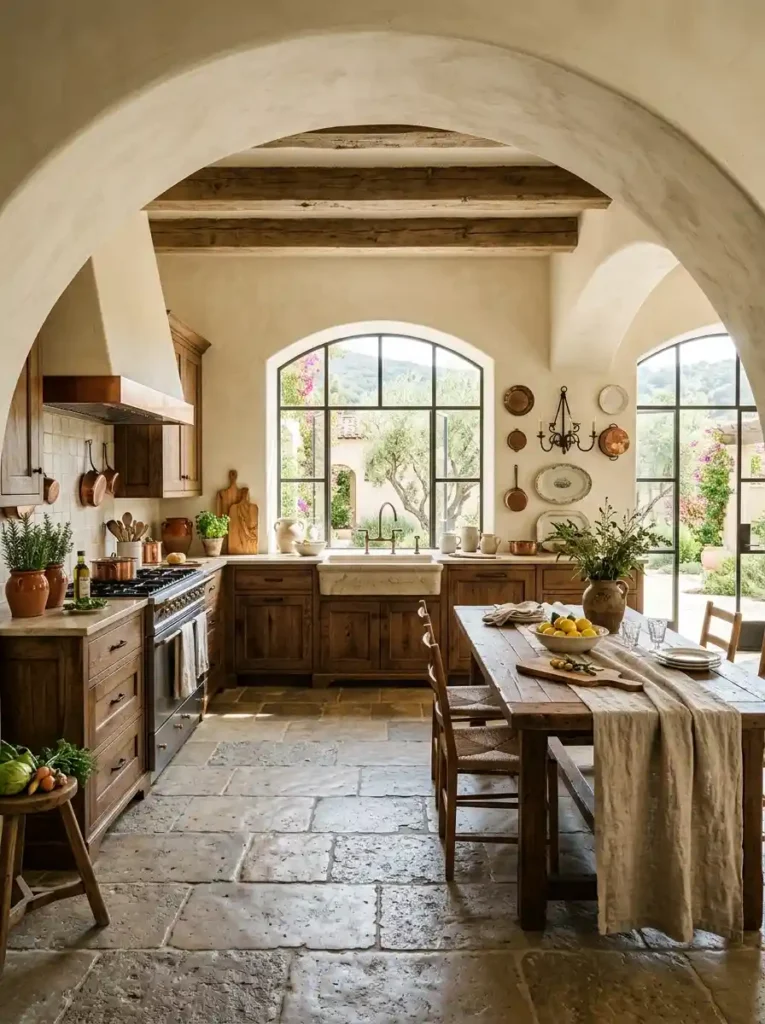
Creating longevity within a culinary design space involves placing value on lasting elegance as opposed to trend-driven design. A longevity-driven design is one that incorporates the use of authentic structural architecture with materials that have heirloom status. Incorporation of such features enables the homeowner to construct a culinary space that will last for generations without requiring any significant changes, hence achieving timeless sophistication.
This can be achieved through incorporation of solid foundations such as stone floors, oak cabinetry, and architectural arches. The use of such sturdy and low-maintenance finishes enables the creation of an elegant yet functional Mediterranean kitchen. It is important to take into consideration the need for longevity while designing this particular type of kitchen because it has high-end features.
Final Thoughts
A contemporary Mediterranean kitchen is not just a passing fad but an enduring design concept rooted in warmth, texture, and subtle elegance. With the use of authentic materials such as zellige tiles, tadelakt plaster, and antique brass, combined with the simplicity of minimalism, you can craft a design concept that is historically rich yet entirely functional. Whether you’re remodeling your entire kitchen or merely updating some elements, the essential idea is to celebrate imperfection and prioritize quality over quantity. The outcome will be a Mediterranean kitchen that is equally pleasing to prepare food and dine in.
Love saving home decor inspiration for later? Follow us on Pinterest for more curated ideas, mood boards, and design tips that’ll keep your creativity flowing — Vibed Home
Frequently Asked Questions
-
What constitutes a modern Mediterranean kitchen interior?
A modern Mediterranean kitchen interior is a combination of traditional Southern Europe charm and minimalist design philosophy. The style includes the use of authentic elements, such as zellige tiles, tadelakt plaster, reclaimed wood beams, and aged brass hardware paired with clean layouts, open shelving, and the soft color palette of terracotta, alabaster, and olive green.
-
Which colors are appropriate for a Mediterranean kitchen design?
The ideal Mediterranean kitchen interior color palette involves natural colors, including alabaster white as the main background, combined with baked terracotta and olive green accent hues. You can create such a color scheme by using handmade tiles or ceramic accessories and kitchen island with terracotta tones to bring some Mediterranean flair into your cooking space.
-
What are some easy ways to make your kitchen more Mediterranean without spending a fortune?
Renovation does not necessarily mean a Mediterranean kitchen interior design; you can use some simple tricks to decorate your kitchen in Mediterranean style. Install new cabinet hardware using unlacquered brass or wrought iron pulls, remove heavy kitchen cabinets, and use floating wooden shelving instead. Decorate your kitchen shelving units with terracotta pots, olive wood cutting boards, and linen tea towels.
-
Which kind of countertop will work well in a Mediterranean kitchen?
A contemporary Mediterranean kitchen can be matched perfectly with honed limestone, cream quartz, or microconcrete countertops. These countertops are practical, durable, and warm but do not take up too much of the room. Do not go for overly glossy or heavily patterned counters; instead, opt for a matte finish with either a thick or eased edge.
-
What light fixtures match a Mediterranean kitchen?
The pendant lights that you may use in your kitchen should be made out of natural materials like rattan, hammered metal, and terracotta. They give off beautiful shadows when placed near rough plaster walls. For a more transitional Mediterranean kitchen, you could install an elongated light fixture over the kitchen island and rustic ambiance lights.
-
Are modern kitchen appliances compatible with a Mediterranean kitchen aesthetic?
Definitely yes. It is all about intelligent integration and curation of pieces to create the desired effect. Panel-capable refrigerators and dishwashers are the right choice. For accent appliances, choose a stove with a French top in matte white or black paired with unlacquered brass pulls.
-
What are some things I should never do in designing a Mediterranean kitchen?
One of the main no-go zones is sterilization of space while pursuing minimalism, since this goes against the essence of the Mediterranean kitchen design. Some other common missteps in creating the look include use of fake and sleek materials instead of authentic, insufficient layered lighting, lack of attention to plasterwork lighting, and selection of machine-made tiles over handmade ones.